

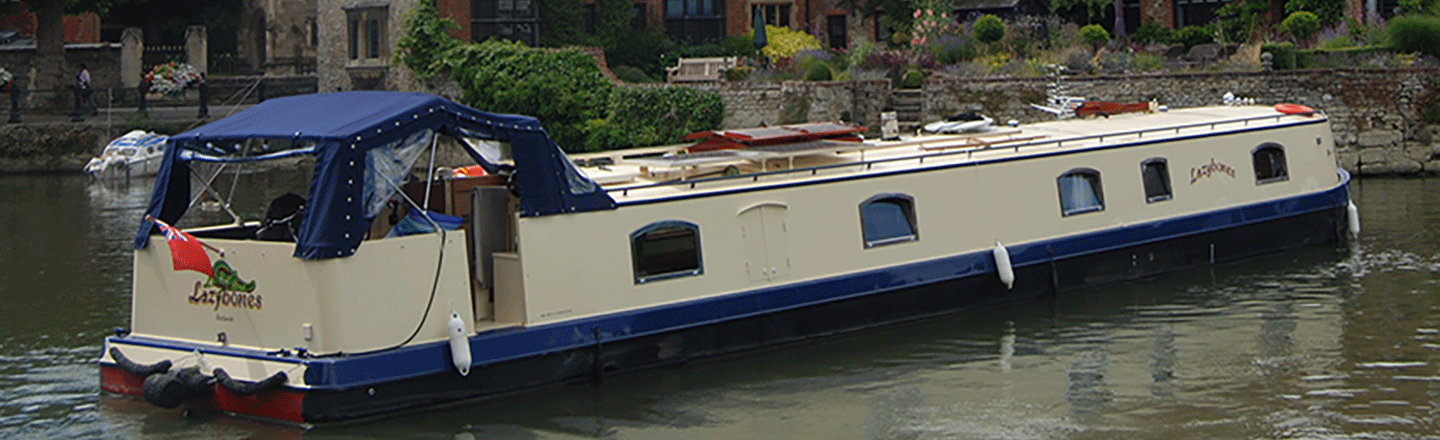
Broad Beam/Dutch Barge Hybrid Systems
Our parallel hybrid systems provide the best feature/cost performance of all the competing hybrid configurations. An integrated Hybrid system has been designed to provide a complete power and propulsion solution.
The hybrid system does not disturb the normal shaft/propeller connection to the diesel; instead, as the name implies, it connects to the shaft in parallel with the standard diesel engine. Hybrid systems have the most to offer in efficiency improvements during low to mid-power cruising, and our system makes the best use of this basic principle. The standard diesel engine is sized to provide the maximum power requirement for the vessel, while the electric drive is designed to match the boat's mid-range power needs. This makes the electric drive components smaller and provides a cost-effective hybrid solution.
Hybrid Marine has been supplying Hybrid packages for Broad Beam and Dutch barges since 2012 and has many satisfied customers. Please take a look at our Case Studies for further information.
|
|
|
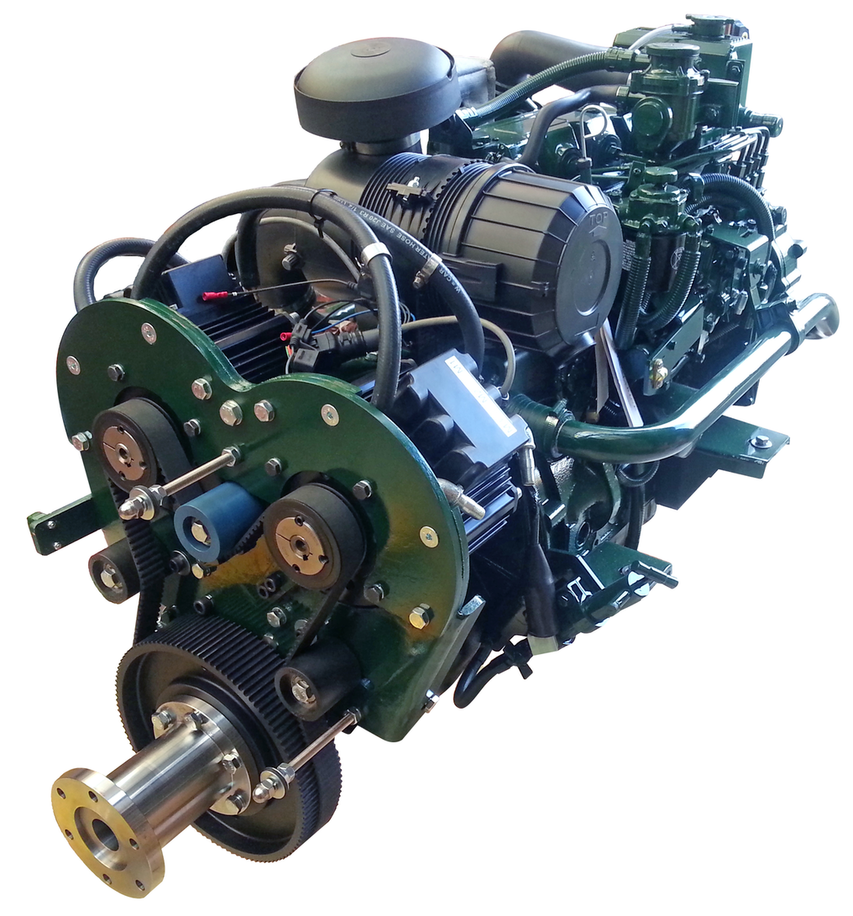
Beta Marine 105 with 20kW Hybrid |
|
System Overview
It takes approximately 5 to 10kW to move an average 35T Broadbeam boat at moderate canal speeds (3 to 4 MPH). The 20kW "V twin" electric motor provides this with plenty to spare for normal manoeuvring. If you are operating in adverse conditions, say crossing the channel or on a fast-flowing stretch of a river, then you will need the full power of the main engine.
Typically, the engine runs at just over tick-over speeds (1,200 to 1,400 RPM) in restricted waters. When cruising at this low engine speed, the canal boat hybrid is designed to provide up to 12 kW of power generation.
In normal calm canal conditions, you can drive on the electric motor for prolonged periods. How long you can use electric drive depends on the size of your batteries. A 48V / 800Ah battery bank would last around 3 to 5 hours. Keep in mind this is a continuous operation. If you are transiting a flight of locks, you only use electrical energy when moving. This eliminates idling the engine in locks and provides considerable savings in fuel.
When the batteries run down, you start the engine and drive in the normal way. Currently, the hybrid automatically becomes a generator to recharge the batteries. The batteries are quickly recharged at typical propulsion speeds via the powerful hybrid generator and boost alternator bank. Every hour of engine drive can store enough energy in the batteries to travel between 1 and 1.5 hours in electric drive.
After the batteries are recharged, you can return to the electric drive or save the energy stored for powering your electrical circuits in the evening.
System Features and Functions
- Whisper quiet electric operation, yet the vessel's standard diesel engine remains available to meet high-end power requirements.
- Listen to the leaves rustling in the trees and observe the wildlife as never before.
- No more idling in locks; you can breathe fresh air and hear your crew from the bottom of the lock.
- Charge with the hybrid when on the move.
- In the evening, power your entire boat in complete silence with the large inverter and high-capacity battery bank.
- No more engine charging in the morning/evening to top up substandard 12V batteries.
- Cook electric in complete silence and eliminate gas onboard.
- Significant reduction in fuel consumption and engine hours.
- Build your hybrid canal boat for very little extra.
Ref |
Hybrid package components |
A |
Marine diesel engine, Beta 75 to 150 or Shire 70 to 160 |
B |
Liquid-cooled, brushless, "V Twin" motor/generator, 20kW electric drive and 10-12kW generation |
C |
Standard marine gearbox, PRM500 |
D |
Boost alternator bank provides an extra 5kW of charging for the 48V battery. Boosts charge rate up to 15kW |
E |
Standard 6" coupling to propeller shaft |
F |
Smart Morse control. Standard Morse cable connection to the engine (not supplied), a sensor for hybrid control in electric drive. |
G |
Hybrid control box (x2), Motor speed/direction control, multi-phase battery charging when the engine is running |
H |
Hybrid colour display |
I |
Charger/Inverter. 5kVA (electric cooking) |
J |
48V, 800Ah Battery bank supplies both propulsion and house loads. |
K |
Cross charger for buffer battery supplying onboard 12V appliance |
|
|
Not supplied with the package |
L |
Renewable charging sources, Wind, Solar, etc |
M |
Standard 230V domestic appliances driven by the high-power inverter |
Download a brochure Beta packages or Shire packages